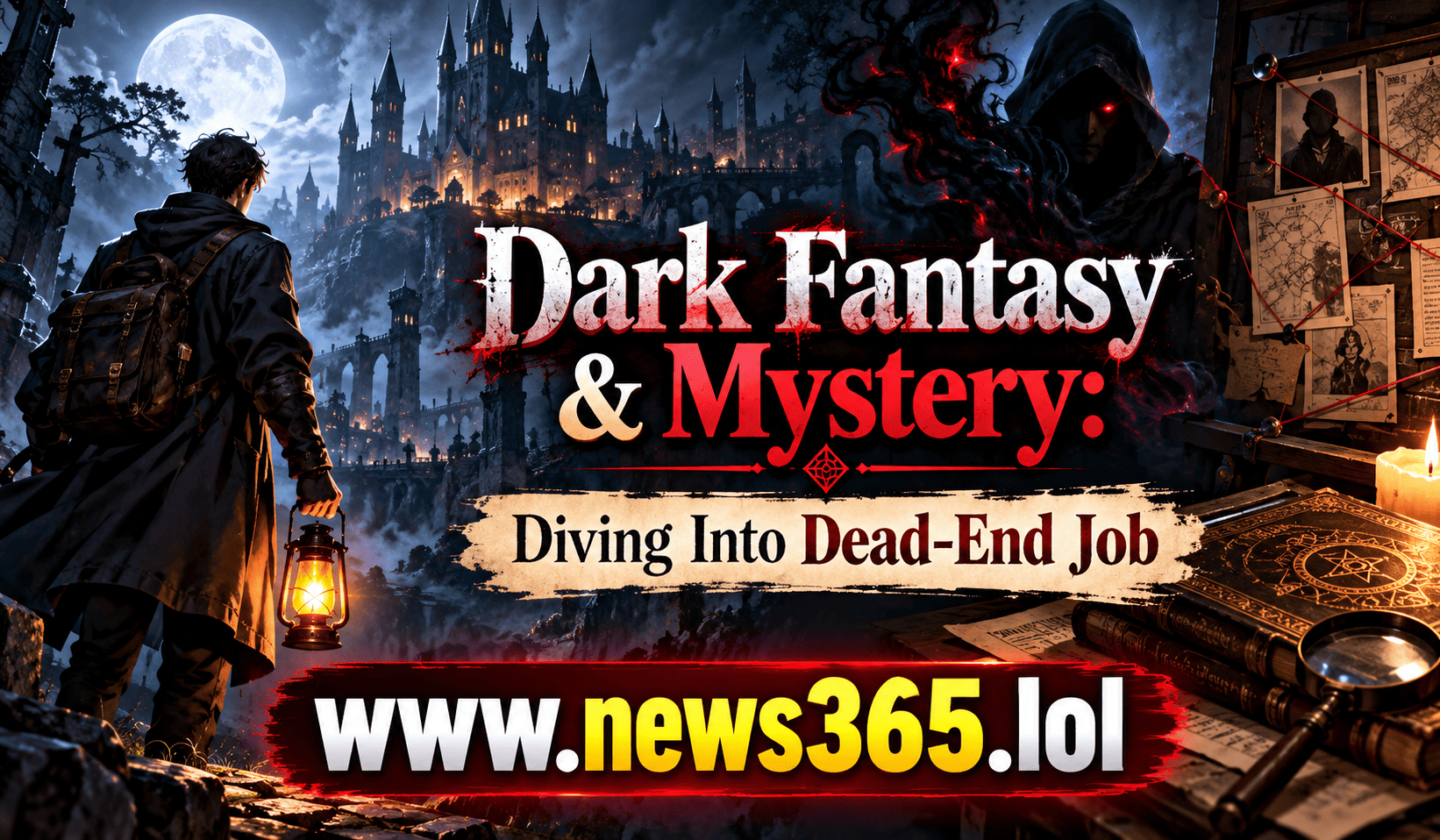
Stories that combine dark fantasy and mystery have a special way of capturing an audience’s attention. They take familiar situations and transform them into unsettling experiences filled with strange events, unanswered questions, and hidden dangers. Dead-End Job is an intriguing title to explore through this lens, as it immediately brings together two ideas that can create an engaging narrative: the frustration of an ordinary working life and the possibility of something far more disturbing hiding beneath the surface.
The phrase “dead-end job” usually describes employment that offers little opportunity for progress. It suggests routine, exhaustion, and the feeling of being trapped in a situation with no obvious escape. In a dark fantasy or mystery setting, however, that familiar expression can carry a much deeper meaning. A workplace might become a place of secrets, an everyday task might lead to an unexpected discovery, or an apparently normal environment might conceal rules that nobody dares to question.
The appeal of this concept lies in the contrast between the ordinary and the extraordinary. Readers and viewers often find supernatural stories more compelling when their strange events begin in recognisable surroundings. Instead of immediately introducing a distant magical kingdom, a story can begin with a routine shift, an unfamiliar colleague, or an unusual assignment. As the mystery develops, the audience gradually discovers that the situation may be much more complicated than it first appeared.
It is important to note that the title alone does not establish the specific plot, characters, release details, or supernatural elements of Dead-End Job. This article therefore examines the dark fantasy and mystery themes suggested by the title rather than presenting unverified production information as fact.
Understanding the Dark Fantasy Appeal of Dead-End Job
Dark fantasy combines elements of fantasy with unsettling themes, dangerous situations, and morally complicated characters. Unlike lighter fantasy, which often emphasises wonder, adventure, and clear distinctions between good and evil, dark fantasy frequently explores fear, sacrifice, corruption, and the consequences of power.
A story built around the idea of a dead-end job could use these elements to transform an ordinary workplace into an unfamiliar world. The workplace might represent more than a source of income. It could become a system that controls the characters, limits their choices, and forces them to confront uncomfortable truths. Even without relying on spectacular magical battles, a writer can create a disturbing atmosphere through unexplained rules, strange behaviour, and the gradual loss of certainty.
The strongest dark fantasy stories also understand that fear does not always come from a visible monster. Sometimes, the most unsettling element is the discovery that the world operates according to rules the protagonist does not understand. A harmless-looking object might have a hidden purpose, a routine instruction might carry serious consequences, or a seemingly helpful character might be hiding an important secret.
These possibilities make the title Dead-End Job particularly suggestive. It can be interpreted as a reference to both professional stagnation and a more literal sense of confinement. The idea creates room for a story in which escaping a difficult situation requires more than simply resigning or finding another opportunity.
Mystery as the Driving Force
Dark fantasy creates an atmosphere, but mystery gives an audience a reason to keep investigating. A compelling mystery introduces questions gradually and provides enough clues to encourage speculation without revealing every answer too early.
In a story centred on an unusual job, the central question might concern the true purpose of the workplace. Why do certain employees behave strangely? Why are particular rules enforced so strictly? What happens when someone ignores an instruction? These are hypothetical narrative possibilities, not confirmed plot details about a specific production called Dead-End Job.
Such questions can create a strong connection between the audience and the central character. Instead of receiving all the information immediately, readers or viewers discover clues alongside the protagonist. Every new conversation, unexplained incident, and contradiction can change their understanding of the situation.
Good mystery writing also depends on controlling the release of information. If every secret is revealed too early, the story loses its tension. If the audience receives no meaningful clues, the mystery can feel confusing rather than exciting. A balanced narrative offers small discoveries that answer some questions while introducing more complicated ones.
The relationship between mystery and dark fantasy can make this process especially effective. An unexplained event might initially appear supernatural, but later evidence could suggest a human explanation. Alternatively, an apparently ordinary problem might reveal a genuinely fantastical cause. Moving between these possibilities allows a story to maintain uncertainty while developing its own internal logic.
The Workplace as a Symbol of Confinement
One of the most interesting ways to interpret Dead-End Job is through the workplace itself. Employment is a familiar part of everyday life, and many people understand the pressure of repetitive responsibilities, strict schedules, difficult management, and limited opportunities for advancement.
These experiences can provide a realistic foundation for a supernatural or psychological mystery. A character who already feels trapped by financial pressure or professional expectations may be particularly vulnerable when confronted with an extraordinary situation. The struggle then becomes both external and personal: the character must understand the mystery while deciding how much they are willing to risk to escape it.
A workplace can also function as a miniature society. Managers establish rules, colleagues form alliances, and employees compete for recognition or security. When dark fantasy enters this environment, ordinary workplace relationships can acquire a more threatening dimension. Authority might become absolute, promotions might come with unexpected costs, and loyalty might be tested by circumstances that nobody anticipated.
This approach also creates opportunities for social commentary. A story can explore how people respond to systems that appear impossible to change. Some characters may follow rules because they fear the consequences of resistance, while others may quietly search for ways to challenge the system. Their decisions can reveal different attitudes toward power, survival, ambition, and personal freedom.
The workplace setting is therefore valuable not only because it offers a convenient location for mysterious events, but also because it can make the underlying conflict emotionally recognisable.
Building an Eerie Atmosphere Through Small Details
Atmosphere is essential to dark fantasy. A story does not need constant danger to maintain suspense. Sometimes, a quiet corridor, an empty office, an unfamiliar sound, or a conversation that ends too abruptly can create more tension than an elaborate action sequence.
A workplace setting offers many opportunities for this kind of storytelling. Fluorescent lights, locked storage rooms, repetitive announcements, abandoned desks, and silent lifts are ordinary details that can become unsettling when presented in the right context. Their familiarity makes the unusual elements feel closer to reality.
Sound and lighting can also influence how an audience interprets a scene. A familiar room may feel safe during the day but threatening late at night. The same hallway can appear ordinary until a character notices that something has changed. These contrasts allow tension to develop naturally rather than relying entirely on sudden shocks.
In written fiction, atmosphere can be created through careful descriptions, sentence rhythm, and the selective use of information. In a screen production, cinematography, music, sound design, and performance can achieve similar effects. The underlying principle remains the same: the audience should sense that something is wrong before fully understanding what it is.
For a mystery-driven dark fantasy story, this slow accumulation of unease can be particularly effective. It gives the audience time to form theories, question what they have seen, and become increasingly invested in discovering the truth.
Characters, Secrets, and Moral Choices
A supernatural mystery becomes more meaningful when its characters have personal reasons to investigate the truth. Curiosity alone may begin the journey, but fear, ambition, guilt, loyalty, or the desire for freedom can keep the conflict moving.
A protagonist associated with a seemingly hopeless job could be dealing with financial difficulties, uncertain career prospects, or a need to prove themselves. Such circumstances would make the character’s initial decision to remain in a troubling environment understandable. Leaving might seem like the simplest solution, but personal obligations or the discovery of an important secret could complicate that choice.
Supporting characters can add further uncertainty. A friendly colleague might know more than they reveal. A supervisor might be protecting the organisation for reasons that are not immediately clear. Another employee might appear suspicious while actually attempting to prevent a greater danger. These possibilities create opportunities for shifting alliances and conflicting interpretations of events.
Character development is particularly important in dark fantasy because the central conflict often challenges a person’s values. A protagonist may need to decide whether to protect someone else, expose a dangerous secret, or accept a compromise that makes survival easier but threatens their sense of right and wrong.
Three character elements can be especially effective in a mystery-driven workplace story:
- A personal motivation: The protagonist needs a convincing reason to remain involved.
- Conflicting loyalties: Relationships become more complicated when characters possess different information.
- Meaningful consequences: Discovering the truth should change the characters’ choices and relationships.
When these elements work together, the mystery becomes more than a sequence of strange incidents. It becomes a test of character.
Dark Fantasy and Psychological Suspense
Dark fantasy and psychological suspense overlap in several important ways, although they are not identical. Dark fantasy generally allows supernatural or fantastical elements to shape the story, while psychological suspense focuses on uncertainty, perception, fear, and the mental experiences of the characters.
A story can combine both approaches by leaving the audience unsure whether a character is facing an external threat, misunderstanding a situation, or struggling with information that challenges their assumptions. The uncertainty should be purposeful, however. A satisfying narrative eventually provides enough evidence for its central developments to make sense.
This balance is especially useful in stories built around ordinary environments. A character who notices unusual patterns in the workplace might initially suspect that colleagues are hiding something. As the investigation continues, the evidence could challenge the character’s original explanation. Each new discovery can encourage the audience to reconsider earlier scenes.
The most effective psychological tension does not depend on making everything inexplicable. Instead, it establishes a consistent set of circumstances and then reveals how little the characters understand about them. This gives the audience something concrete to examine while preserving a sense of danger.
For a title such as Dead-End Job, this combination of everyday stress and unexplained events offers an interesting thematic direction. The job can represent an external trap, while the mystery challenges the protagonist’s understanding of the people and systems around them.
What Could Make Dead-End Job Stand Out?
The dark fantasy and mystery categories are broad, so originality depends on more than including supernatural incidents or hidden secrets. A distinctive story needs a clear identity, believable character motivations, and a mystery that develops in a purposeful way.
The workplace concept provides one potential source of originality because it places extraordinary events within an environment associated with routine and responsibility. Instead of presenting fantasy as something separate from daily life, a narrative could use it to examine the pressures that people already experience.
A strong execution would also need to balance its different elements. Too much explanation could weaken the suspense, while too little information might frustrate the audience. Likewise, supernatural events would be more effective if they affected the characters’ decisions rather than appearing simply to make individual scenes more dramatic.
The following table summarises the main storytelling elements that could support this kind of narrative.
| Story element | Potential contribution |
| Dark fantasy | Creates an unsettling world with unusual rules and dangerous possibilities |
| Mystery | Encourages speculation and gives the audience a reason to continue |
| Workplace setting | Connects extraordinary events to familiar everyday experiences |
| Character conflict | Adds emotional stakes and creates difficult decisions |
| Atmosphere | Builds tension through setting, sound, and carefully revealed details |
| Gradual revelations | Rewards attention while keeping the central questions engaging |
These elements are analytical possibilities rather than verified descriptions of the actual plot of Dead-End Job. Confirmed details about its creators, format, release date, and storyline would be needed for a production-specific review.
Why Dark Fantasy and Mystery Continue to Attract Audiences
Dark fantasy and mystery remain appealing storytelling approaches because they offer different kinds of satisfaction. Fantasy allows audiences to explore unfamiliar possibilities, while mystery invites them to interpret clues and test their own explanations. Together, the genres can deliver both imaginative escapism and the intellectual pleasure of solving a puzzle.
The workplace theme can make that combination even more relatable. Many people recognise the feeling of being stuck in a routine or dealing with a system they do not fully understand. A supernatural interpretation of those experiences can transform familiar frustrations into dramatic conflicts without losing their emotional meaning.
These stories also encourage discussion. Viewers may disagree about a character’s motives, debate the meaning of a mysterious event, or predict how an unresolved conflict will end. When a narrative gives the audience enough evidence to develop competing theories, the experience can continue beyond the story itself.
However, lasting appeal ultimately depends on execution. A compelling title and an intriguing premise can attract attention, but consistent world-building, thoughtful character development, and a satisfying resolution are what make a mystery memorable.
Conclusion: The Intrigue Behind Dead-End Job
Dead-End Job offers a title that naturally invites exploration of the relationship between everyday frustration, hidden secrets, and the darker possibilities of fantasy. Interpreted as a dark fantasy and mystery concept, it suggests a setting where routine responsibilities could conceal unusual dangers and where escaping a difficult situation might require discovering the truth behind it.
The strongest stories in this space make the familiar feel strange without abandoning emotional realism. They use atmosphere to build unease, mysteries to sustain curiosity, and character choices to give supernatural conflicts genuine consequences. A workplace can become much more than a backdrop when it reflects the pressures, compromises, and power structures that shape people’s lives.
Until reliable information about the specific work is established, it is best to treat these ideas as thematic analysis rather than a confirmed review of its plot or production. Nevertheless, the combination of dark fantasy and mystery provides a promising framework for examining how ordinary environments can become places of uncertainty, danger, and unexpected discovery.
Frequently Asked Questions (FAQs)
1. What is a Dead-End Job about?
The title alone is not enough to confirm the official plot of Dead-End Job. The title can suggest themes of professional stagnation, confinement, hidden secrets, or an unsettling workplace, but an official synopsis is needed to establish the actual storyline.
2. What is dark fantasy?
Dark fantasy is a genre that combines fantastical elements with unsettling themes, danger, fear, morally complex characters, or disturbing worlds. It can include supernatural creatures, mysterious forces, and conflicts that challenge traditional ideas of good and evil.
3. How does mystery contribute to dark fantasy?
Mystery encourages the audience to investigate unexplained events, question character motives, and search for hidden connections. It adds suspense to the fantastical setting and makes revelations more rewarding when the clues are developed consistently.
4. Why is a workplace an interesting setting for a dark fantasy story?
A workplace is familiar to most audiences and already contains rules, hierarchies, relationships, and pressures. Introducing unexplained events into this environment can create a strong contrast between ordinary routines and extraordinary dangers.
5. Is Dead-End Job a movie, series, or game?
Its format cannot be reliably established from the title alone. An official website, distributor listing, publisher page, or verified entertainment database should be consulted before identifying it as a film, television series, web series, or game.
6. What makes a dark fantasy mystery engaging?
Strong character motivations, a consistent set of world rules, a suspenseful atmosphere, meaningful clues, and a satisfying explanation can make the story engaging. The best mysteries maintain uncertainty without making the audience feel that the answers are arbitrary.