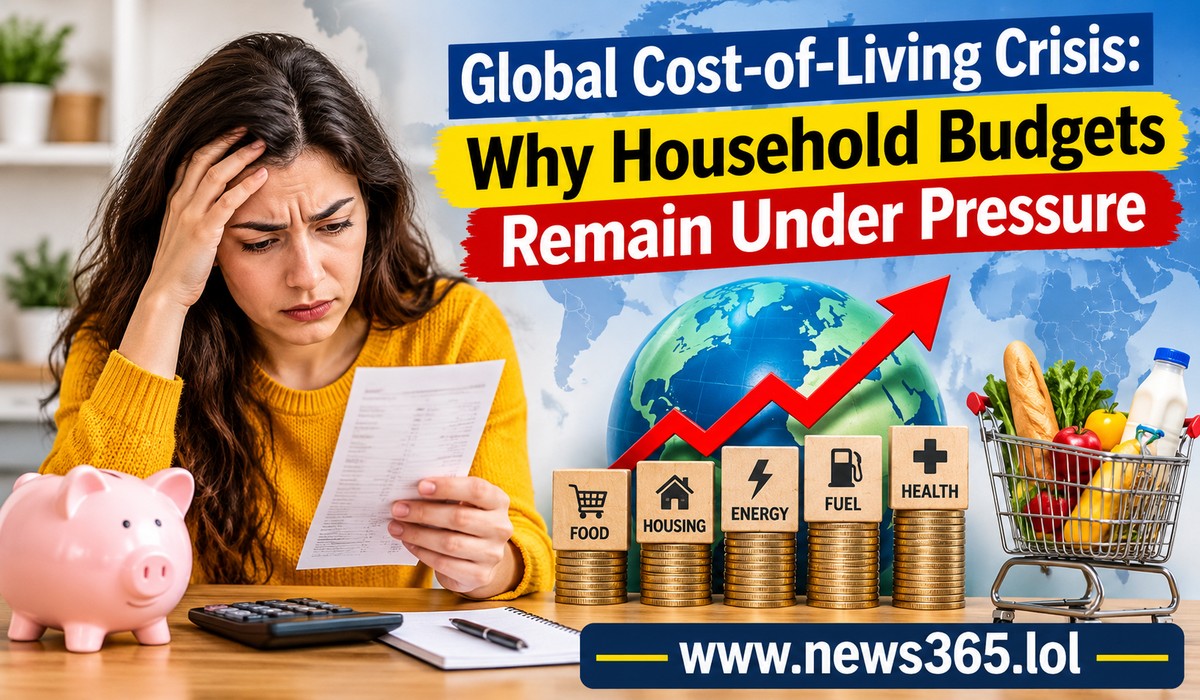
The cost of living has become a major concern for households across the world. From rising grocery prices to expensive housing, electricity bills, transportation costs, and healthcare expenses, families are finding it increasingly difficult to manage their monthly budgets. Even people with regular jobs and stable incomes are feeling financial pressure because their earnings are not always increasing at the same speed as everyday expenses.
The global cost-of-living crisis is not limited to one country or region. Families in developed and developing economies are facing similar challenges, although the reasons and effects may differ. Some households are spending more on basic necessities, while others are reducing savings, delaying major purchases, or depending on credit to manage their expenses.
Although inflation has slowed in some parts of the world, many prices remain much higher than they were a few years ago. This means households are still dealing with the effects of earlier price increases. Understanding why living costs remain high and how these changes affect families is important for managing personal finances and making better financial decisions.
What Is the Global Cost-of-Living Crisis?
The cost-of-living crisis refers to a situation where the prices of essential goods and services increase faster than household incomes. As a result, people need more money to maintain the same standard of living.
For example, a family that previously spent a certain amount on groceries, rent, transport, and electricity may now need a much larger monthly budget for the same lifestyle. Even when salaries increase, the additional income may not be enough to cover rising expenses.
The problem becomes more serious for people with limited incomes because they already spend a large share of their earnings on essential needs. They have less money available for savings, education, entertainment, travel, and unexpected expenses.
The crisis also affects different income groups in different ways. Lower-income households often face the greatest pressure because basic necessities take up most of their monthly earnings. Middle-income families may also struggle when housing costs, school fees, loan payments, and daily expenses increase together.
Why Household Expenses Continue to Increase
Several factors contribute to the rising cost of everyday living. These factors are connected, and changes in one area can affect prices in many other parts of the economy.
Rising Food and Grocery Prices
Food is one of the biggest expenses for most households. When grocery prices increase, families notice the difference almost immediately because food is something they need to purchase regularly.
The prices of vegetables, fruits, milk, cooking oil, rice, wheat, meat, and other essential products can change because of weather conditions, transportation expenses, farming costs, and supply problems.
Poor harvests caused by droughts, floods, or unusual weather can reduce the availability of certain food products. When fewer products reach markets, prices may increase. Higher fuel and fertiliser costs can also make farming and food transportation more expensive.
Food prices are particularly important for low-income families because they cannot easily reduce their spending on essential meals. Instead, they may purchase cheaper products, reduce the quantity of food they buy, or change their regular eating habits.
Expensive Housing and Rental Costs
Housing is another major reason household budgets remain under pressure. In many cities, rental prices and property costs have increased because of strong demand, limited housing availability, and higher construction expenses.
People moving to cities for employment and education create additional demand for rental homes. When the number of available houses does not increase at the same speed, landlords may charge higher rents.
Homeowners also face increasing expenses through maintenance, property taxes, insurance, and loan payments. People purchasing homes may find it difficult to afford properties because higher interest rates can increase the total cost of borrowing.
For young professionals and families, expensive housing can make it harder to save money or purchase their first home. Many people are choosing smaller homes, sharing accommodation, or moving farther away from city centres to manage their monthly expenses.
Higher Energy and Electricity Bills
Energy costs have a direct effect on household budgets. Electricity, cooking gas, petrol, and diesel are essential for daily life. When their prices increase, families often experience additional financial pressure.
Energy prices can change because of international conflicts, supply problems, changes in demand, and production costs. Countries that depend heavily on imported energy may be especially affected by changes in global fuel markets.
Higher energy costs also affect businesses. Factories, transport companies, restaurants, and shops may spend more on electricity and fuel. These additional expenses can eventually be reflected in the prices customers pay.
For households, reducing unnecessary electricity use, choosing energy-efficient appliances, and avoiding fuel waste can help control some expenses. However, these steps cannot completely protect families from large price increases.
The Role of Global Conflicts and Supply Problems
International events can have a major influence on the cost of living. Conflicts between countries, trade restrictions, shipping delays, and political disagreements can affect the movement of goods across borders.
Many countries depend on imported products, raw materials, fuel, food items, and industrial supplies. When international trade becomes difficult, businesses may face higher transportation costs or delays in receiving essential materials.
These problems can increase the cost of producing and selling goods. Companies may pass some of these additional expenses to customers, which can lead to higher prices in local markets.
Shipping disruptions are another important concern. When important trade routes become unsafe or unavailable, cargo ships may need to take longer routes. This increases fuel expenses, delivery times, and transportation charges.
Even countries that are not directly involved in international conflicts can experience higher prices because modern economies are closely connected.
Why Salary Increases Are Not Enough
One of the biggest problems during a cost-of-living crisis is the difference between income growth and price increases.
Many employees receive annual salary increases, but these adjustments do not always match the rising cost of everyday products and services. When prices increase faster than salaries, the actual buying power of workers becomes weaker.
For example, an employee may receive a salary increase of five per cent, but if essential household expenses increase by eight per cent, the employee may still have less money available after paying regular bills.
This situation is particularly difficult for people working in industries where salaries increase slowly. Workers in temporary jobs, small businesses, and low-paying occupations may have limited opportunities to negotiate higher wages.
Self-employed people and small business owners also face challenges. Their operating expenses may increase while customers become more careful about spending. This can reduce profits and make income less predictable.
How the Cost-of-Living Crisis Affects Families
The effects of rising living costs go beyond monthly expenses. They can influence family relationships, education, health, employment choices, and long-term financial security.
Reduced Savings and Financial Security
When most household income goes towards essential expenses, saving money becomes difficult. Families may stop putting money aside for emergencies, retirement, education, or future purchases.
This creates problems when unexpected situations occur. A medical emergency, job loss, vehicle repair, or sudden home expense can become difficult to manage without savings.
Some households may depend on credit cards, personal loans, or borrowed money to cover their regular needs. Although borrowing can provide temporary support, repeated borrowing may create additional financial pressure through interest payments and repayment responsibilities.
Changes in Education and Healthcare Spending
Rising expenses can also affect how families spend money on education and healthcare.
Parents may find it harder to manage school fees, books, transportation, tuition classes, and other education-related costs. Some families may choose less expensive educational options or reduce spending on additional learning activities.
Healthcare expenses can create similar challenges. Higher medical fees, medicine prices, health insurance costs, and hospital charges may encourage people to delay non-urgent treatment.
However, postponing necessary medical care can create bigger problems later. This is why affordable healthcare remains an important part of household financial security.
Greater Pressure on Mental Well-Being
Financial difficulties can create stress and uncertainty within families. People may worry about paying rent, managing loan payments, purchasing groceries, or supporting their children.
Constant financial pressure can affect sleep, relationships, concentration, and everyday happiness. Parents may feel additional responsibility when they cannot provide everything their families need.
The pressure is not always visible to others. Many households continue their regular routines while quietly reducing expenses and worrying about future financial stability.
Why Developing Countries Face Additional Challenges
The cost-of-living crisis affects countries differently. Developing economies may face additional difficulties because many households have limited savings and a larger share of income goes towards essential products.
In countries such as India, rising prices of food, fuel, housing, education, and healthcare can affect millions of families. Urban households may face expensive rent and transportation, while rural families may experience pressure from farming costs and changing food prices.
Currency movements can also influence living costs. When a country’s currency becomes weaker against major international currencies, imported products may become more expensive. This can affect fuel, machinery, electronic products, medicines, and other imported goods.
Informal workers and people with irregular incomes may face even greater uncertainty because they do not always receive fixed monthly salaries or regular employment benefits.
At the same time, rapidly growing cities create pressure on housing, public transport, water supply, and other basic services. Managing these challenges requires long-term planning and investment.
How Businesses Are Responding to Rising Costs
Businesses are also dealing with higher operating expenses. Companies may need to pay more for raw materials, electricity, transportation, employee salaries, rent, and equipment.
Large businesses may have more financial resources to manage these changes, but smaller companies often have limited options. Some businesses increase product prices, reduce unnecessary expenses, change suppliers, or adjust their services.
Small retailers and restaurants may struggle when customers reduce spending. Even if their operating expenses increase, they may not be able to raise prices significantly without losing customers.
Some employers may also delay hiring, reduce working hours, or postpone expansion plans to control expenses.
These decisions can affect workers and local communities. When businesses slow down, employment opportunities may become limited, creating additional pressure on household incomes.
How Households Can Manage Rising Living Costs
Although families cannot control international prices or economic conditions, they can take practical steps to improve their financial situation.
Creating a realistic monthly budget is a useful starting point. Households should understand how much they spend on food, housing, transport, electricity, education, healthcare, and other regular needs. This makes it easier to identify unnecessary expenses and areas where spending can be reduced.
Planning grocery purchases can also help. Preparing meals at home, comparing prices, avoiding food waste, and purchasing frequently used products carefully may reduce monthly food expenses.
Families can review subscriptions, entertainment costs, shopping habits, and other optional spending. Small savings may appear unimportant individually, but they can make a difference when maintained over several months.
Building emergency savings is another important goal. Even a small amount saved regularly can provide some protection against unexpected expenses.
People with existing loans should understand their repayment responsibilities and avoid taking additional debt without considering their ability to repay it. Comparing financial options carefully can help prevent unnecessary borrowing costs.
However, household budgeting cannot solve every problem. Governments and businesses also have an important responsibility to improve affordability through better housing availability, employment opportunities, public transport, healthcare access, and stable economic policies.
What Could Happen to the Global Economy Next?
The future cost of living will depend on several economic and international factors. Energy prices, food production, housing supply, employment conditions, interest rates, and international trade will continue to influence household expenses.
If supply conditions improve and production costs become more stable, some price pressures may become weaker. However, this does not necessarily mean that everyday prices will return to their earlier levels.
Housing affordability may remain a challenge in cities where demand continues to exceed available supply. Similarly, climate-related problems could create uncertainty for food production and agricultural prices.
Technology and improved production methods may help businesses reduce certain expenses over time. Governments may also introduce policies to support lower-income families and improve access to essential services.
However, long-term improvements will require cooperation between governments, businesses, financial institutions, and communities.
Conclusion
The global cost-of-living crisis continues to affect household budgets because essential expenses remain high while income growth is not always strong enough to match them. Rising food prices, expensive housing, energy costs, international conflicts, and supply problems have all contributed to financial pressure.
For many families, the challenge is no longer about maintaining an expensive lifestyle. It is about managing basic needs while protecting savings and financial security.
Household budgeting, careful spending, and responsible borrowing can help people manage difficult financial conditions. However, lasting improvements also depend on affordable housing, stable employment, accessible healthcare, and policies that support ordinary households.
The cost-of-living crisis is a reminder that economic growth should improve everyday life, not just national financial figures. Making essential goods and services affordable will remain an important goal for countries around the world.
Frequently Asked Questions
1. What is the global cost-of-living crisis?
The global cost-of-living crisis occurs when essential expenses such as food, housing, electricity, transportation, and healthcare increase faster than household incomes. This makes it difficult for families to maintain their usual standard of living.
2. Why are household budgets still under pressure?
Household budgets remain under pressure because many essential products and services are still expensive. Even when inflation slows, prices do not automatically return to their previous levels. Families may also face higher rent, loan payments, and utility bills.
3. Which expenses are increasing the most for households?
Food, housing, energy, transportation, education, and healthcare are among the major expenses affecting household budgets. The exact increase depends on the country, local market conditions, and household income.
4. How does the cost-of-living crisis affect low-income families?
Low-income families often spend a large share of their earnings on basic necessities. When prices increase, they may have to reduce food spending, delay healthcare, limit education expenses, or depend on borrowing to manage regular bills.
5. How can families manage the rising cost of living?
Families can manage expenses by preparing monthly budgets, planning grocery purchases, reducing unnecessary spending, avoiding excessive borrowing, and building emergency savings. Comparing prices and making careful financial decisions can also help protect household budgets.