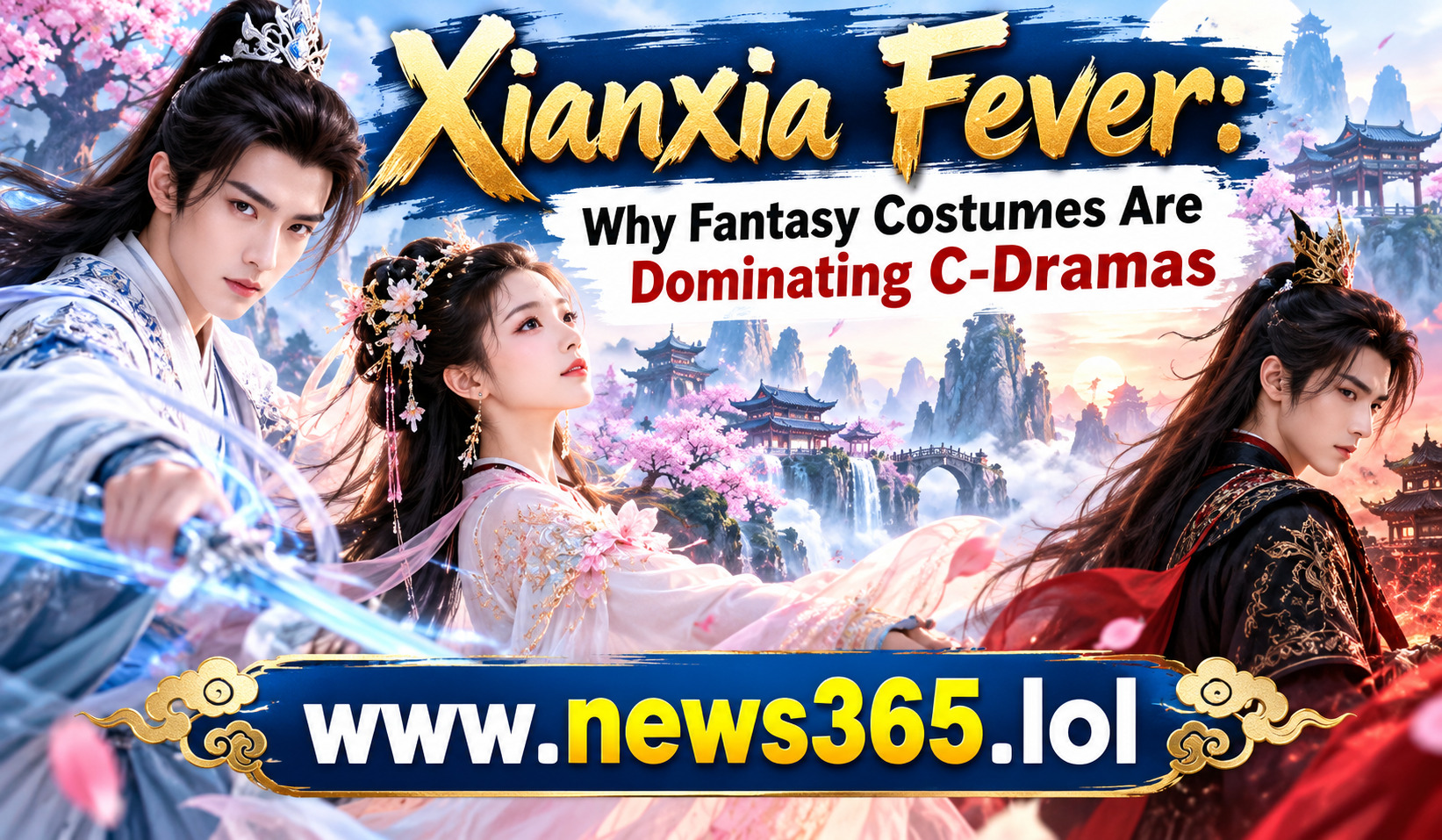
Chinese dramas, widely known as C-dramas, have become increasingly popular among international viewers, and one genre continues to capture attention through its breathtaking visuals, elaborate costumes, and magical storytelling: xianxia. Combining Chinese mythology, immortal cultivation, martial arts, romance, and supernatural adventures, xianxia dramas offer an experience that feels very different from conventional television romance or historical fiction. Their distinctive fantasy costumes have also become a major attraction, turning every appearance into an opportunity for visual storytelling.
From flowing white robes and embroidered silk gowns to elaborate hair ornaments and celestial accessories, fantasy fashion has become one of the most recognizable features of modern xianxia productions. These costumes do more than make characters look beautiful. They establish personalities, communicate social status, distinguish supernatural beings from ordinary humans, and help create the atmosphere of an imaginary world.
The growing international interest in Chinese fantasy dramas has made costume design an important part of their identity. Viewers frequently discuss memorable outfits, recreate hairstyles, share character-inspired looks, and post visual edits across social media. This combination of fashion, mythology, romance, and spectacle explains why xianxia costumes continue to attract attention and why their influence extends beyond the screen.
What Makes Xianxia Different From Other C-Dramas?
Xianxia is a fantasy genre rooted in Chinese mythology, folklore, Taoist-inspired ideas, and stories about spiritual cultivation. Its characters often pursue immortality, develop supernatural abilities, travel between heavenly and mortal realms, and become involved in conflicts between different magical forces.
Although xianxia dramas sometimes include historical-looking settings, they should not be confused with strictly historical dramas. Their costumes and fictional worlds are shaped by creative interpretations of traditional Chinese clothing rather than by a requirement to reproduce a particular historical period accurately.
This creative freedom allows costume designers to experiment with unusual silhouettes, layered fabrics, dramatic sleeves, detailed embroidery, and imaginative accessories. A heavenly immortal might wear a pale, flowing ensemble, while a powerful demon character could appear in darker shades with sharp decorative details. A mortal character may begin with simpler clothing before gradually adopting more elaborate outfits as the story progresses.
Costumes therefore become an essential part of world-building. Before a character explains their background or abilities, the audience may already have clues through the colors, fabrics, and ornaments they wear.
Why Fantasy Costumes Have Become a Major Attraction
One of the biggest reasons xianxia fashion stands out is its visual richness. Many contemporary dramas rely on realistic clothing and familiar everyday settings, but xianxia productions create opportunities for designs that appear almost otherworldly. Wide sleeves move dramatically during action scenes, translucent outer layers create a floating effect, and embroidered details catch the light during romantic or emotional moments.
These visual choices make even ordinary scenes feel theatrical. A conversation in a palace, a reunion beneath falling petals, or a battle in a mountain landscape can become more memorable when the characters’ costumes complement the setting.
The costumes also photograph well. Their contrasting colors, intricate hairstyles, and elaborate accessories make them suitable for promotional posters, fan edits, short videos, and character illustrations. As viewers share these images online, people who have never watched the original drama may become interested simply because of its visual appeal.
Another important factor is the connection between fashion and fantasy. Unlike everyday clothing, these designs can represent supernatural identities and emotional states. A costume might communicate purity, danger, authority, vulnerability, or a character’s changing relationship with the world. This gives the audience something to interpret beyond the dialogue.
The Art of Creating a Celestial Look
Xianxia costume design often relies on a careful balance between fabric, color, shape, and movement. Designers must create clothing that looks extraordinary on camera while still allowing actors to walk, perform action sequences, and express emotions naturally.
Silk-like materials, chiffon, satin, and lightweight layered fabrics are frequently used to create fluid silhouettes. Long sleeves and trailing panels add movement, especially during scenes involving wind, flying, or supernatural powers. Embroidery, metallic accents, beads, and decorative borders provide detail without necessarily overwhelming the entire design.
Color selection is equally important. White, silver, pale blue, and soft pink may be used to suggest elegance, innocence, calmness, or a celestial identity. Deep red can communicate passion, authority, danger, or emotional intensity, while black and purple may help establish a mysterious or powerful presence. These associations are flexible rather than universal; the meaning of a costume depends on the character and the story.
Designers also use contrast to show relationships between characters. Two people from opposing realms may wear very different colors and silhouettes, visually reinforcing their differences. As their relationship develops, subtle similarities in their clothing can suggest growing emotional connections.
The result is a visual language that helps viewers understand a complex fantasy universe without requiring every detail to be explained verbally.
How Costumes Help Build Iconic Characters
In successful xianxia dramas, clothing is often closely connected to character development. The main characters may appear in multiple outfits throughout a series, with each change reflecting a new stage in their journey.
A young cultivator might begin in practical, relatively simple robes that communicate inexperience. After gaining power or entering a prestigious sect, the character may wear more structured clothing with distinctive embroidery or accessories. If the character experiences betrayal, grief, or a transformation in their identity, the wardrobe may become darker, more restrained, or more dramatic.
This approach allows costumes to function as visual storytelling devices. Instead of relying entirely on dialogue, the production can show changes in personality and status through appearance.
Antagonists benefit from the same technique. Their clothing may feature striking shapes, rich fabrics, unusual headpieces, or darker palettes. However, memorable costume design does not automatically make a character evil. Some villains wear elegant, beautiful clothing, creating a contrast between their appearance and their actions.
Romantic leads also benefit from carefully designed wardrobes. Matching accessories, complementary colors, and repeated visual motifs can strengthen the emotional connection between characters. When a costume from an early episode returns during a later reunion, it may remind viewers of earlier events and deepen the scene’s emotional impact.
Popular Xianxia Dramas That Showcase Fantasy Fashion
Several well-known Chinese fantasy dramas demonstrate how costumes contribute to the genre’s appeal. Each production approaches fantasy fashion differently, depending on its characters, tone, and fictional world.
Love Between Fairy and Devil
Love Between Fairy and Devil combines supernatural romance with a visually distinctive fantasy setting. Its central characters have contrasting personalities and backgrounds, and their costumes help reinforce those differences. The styling of the powerful Moon Supreme, Dongfang Qingcang, contrasts with the gentler appearance of the flower spirit Orchid, making their relationship visually interesting as well as emotionally engaging.
The drama demonstrates how color, silhouette, and accessories can help distinguish two characters whose worlds initially seem incompatible.
Till the End of the Moon
Till the End of the Moon is known for its dark fantasy atmosphere, emotional conflict, and elaborate styling. Its costumes contribute to the sense of danger and grandeur surrounding the story. Darker shades, dramatic shapes, and detailed ornaments support the series’ themes of destiny, power, sacrifice, and complicated relationships.
The contrast between beautiful visual design and painful emotional choices is a major part of the drama’s appeal.
The Legend of Shen Li
The Legend of Shen Li offers another example of fantasy costume design working alongside character development. Its powerful female lead, Shen Li, is presented as a capable warrior rather than simply a romantic figure. Her styling supports her strength and authority, while the drama’s other visual elements help create a world of immortals, supernatural conflict, and romance.
The series illustrates how fantasy clothing can accommodate action-oriented characters without sacrificing elegance.
Love and Redemption
Love and Redemption uses fantasy costumes to establish its cultivation world and the different identities of its characters. Flowing robes, ceremonial clothing, and distinctive accessories contribute to the drama’s supernatural atmosphere. Its visual style also supports the story’s themes of reincarnation, loyalty, sacrifice, and romantic destiny.
Together, these dramas show that there is no single formula for xianxia fashion. Some productions favor soft celestial palettes, while others rely on darker, more dramatic designs. The strongest costumes are those that fit the story rather than simply following a visual trend.
The Role of Social Media in the Xianxia Fashion Craze
Social media has made it easier for international audiences to discover Chinese fantasy dramas. A memorable costume can travel across platforms even when viewers do not understand the original language. Short clips, promotional photographs, fan edits, and behind-the-scenes videos can introduce a show’s visual identity in seconds.
Costume-focused content is particularly shareable because it combines fashion, beauty, and storytelling. Viewers may compare different looks worn by the same actor, discuss the meaning of a character’s accessories, or recreate the hairstyles and makeup. Cosplayers also draw inspiration from the detailed garments, adapting designs for conventions, photography, and online communities.
This online attention can encourage new viewers to explore the dramas themselves. A person who first encounters a striking fantasy outfit may become interested in the actor, the romantic storyline, the mythology, or the production’s other costumes.
However, social media popularity does not necessarily mean that every drama will attract the same audience. Viewers also consider acting, pacing, character development, subtitles, and the quality of the story. Costumes can create an initial attraction, but a compelling narrative is usually needed to sustain interest.
Why Costume Design Is More Than Decoration
It is tempting to think of elaborate clothing as an expensive visual addition, but effective costume design performs several practical storytelling functions.
First, it helps establish the rules of the fictional world. Different garments can indicate membership in a cultivation sect, residence in a heavenly palace, or a connection to a supernatural realm. Second, costumes make characters easier to distinguish, especially in dramas featuring large casts. Third, they help create a consistent visual identity that audiences associate with a particular production.
Costumes also affect how scenes are filmed. Fabric movement can influence choreography, while heavy ornaments and layered garments require careful planning during action sequences. Designers must consider comfort, durability, lighting, camera angles, and continuity across multiple shooting days.
A costume that looks magnificent in a still photograph may not work equally well during a long fight scene or an outdoor sequence. Successful productions balance visual ambition with the practical demands of filming.
There is also a cultural dimension. Although xianxia fashion is usually fictionalized, it often draws inspiration from traditional Chinese clothing, historical silhouettes, textile techniques, and decorative arts. For some international viewers, these designs provide an introduction to Chinese visual culture. At the same time, it is important to recognize that fantasy costumes are creative interpretations and should not automatically be treated as historically accurate representations of traditional dress.
The Challenges Behind Elaborate Fantasy Fashion
Creating elaborate costumes can require considerable time, craftsmanship, and coordination. A leading character may need numerous outfits for different realms, ceremonies, battles, and stages of personal development. Each garment must fit the actor, suit the scene, and remain consistent with the production’s visual direction.
Large productions may also require costume teams to maintain multiple versions of the same outfit. One version might be reserved for close-up scenes, while another is used for action sequences. Repairs and continuity checks are especially important when garments include delicate embroidery, long sleeves, or intricate accessories.
Another challenge is avoiding repetition. Because many xianxia dramas share familiar visual elements, designers must find ways to give each production its own identity. Simply adding more embroidery or brighter colors does not guarantee originality. A distinctive silhouette, a meaningful accessory, or a costume transformation connected to the plot can be more effective than excessive decoration.
Ultimately, the most successful fantasy wardrobes are not necessarily the most expensive. Their strength comes from the relationship between design, performance, cinematography, and narrative purpose.
What the Future Holds for Xianxia Costume Trends
Xianxia fashion is likely to remain an important part of Chinese fantasy television because it offers a strong visual identity that is easy to recognize and share. As production techniques evolve, designers can continue experimenting with fabric textures, lighting effects, digital environments, and increasingly complex fantasy settings.
At the same time, audiences may expect greater individuality in costume design. Viewers who have watched many fantasy dramas can recognize familiar patterns, so future productions have an opportunity to introduce more distinctive visual concepts while respecting the genre’s established traditions.
There is also room for more character-driven fashion. Rather than changing outfits solely to create spectacle, dramas can use wardrobe choices to explore personal identity, relationships, social expectations, and moral transformation. Such an approach would allow costumes to remain visually impressive while making them more meaningful.
The international popularity of Chinese dramas may further encourage costume exhibitions, fan-made recreations, fashion-inspired content, and discussions about the cultural influences behind particular designs. Whether these developments translate into broader commercial fashion trends will depend on audience demand and how creators and brands choose to engage with the genre.
Conclusion
The xianxia costume craze is about much more than beautiful robes and elaborate hairstyles. Fantasy clothing helps Chinese dramas build imaginary worlds, establish supernatural identities, communicate emotions, and make characters visually memorable. It also gives fans a reason to share their favorite scenes, recreate distinctive looks, and discover new series.
Dramas such as Love Between Fairy and Devil, Till the End of the Moon, The Legend of Shen Li, and Love and Redemption demonstrate how costume design can complement romance, mythology, action, and character development in different ways.
As audiences continue exploring C-dramas, fantasy costumes will remain one of the genre’s most recognizable strengths. Their lasting appeal comes from the combination of artistic craftsmanship and narrative purpose. When clothing helps tell the story rather than merely decorate it, even a single flowing robe or carefully chosen ornament can become an unforgettable part of a drama’s identity.
Frequently Asked Questions (FAQs)
1. What does xianxia mean in Chinese dramas?
Xianxia is a Chinese fantasy genre inspired by mythology, folklore, spiritual cultivation, immortality, and supernatural adventures. It often combines romance, action, magical abilities, and conflicts between heavenly, mortal, and other fictional realms.
2. Why are xianxia costumes so elaborate?
The costumes help create a fantastical atmosphere, distinguish characters, establish status, and communicate personality. Their flowing fabrics, detailed embroidery, decorative accessories, and carefully selected colors make the fictional world more visually convincing.
3. Are xianxia costumes historically accurate?
Not necessarily. Although designers may draw inspiration from traditional Chinese clothing and historical styles, xianxia costumes are generally creative interpretations designed to suit imaginary worlds and supernatural characters.
4. Which C-dramas are known for fantasy costumes?
Popular examples include Love Between Fairy and Devil, Till the End of the Moon, The Legend of Shen Li, and Love and Redemption. Each uses different color palettes, silhouettes, and accessories to support its characters and setting.
5. How does costume design influence storytelling?
Costumes can communicate a character’s background, authority, emotional state, and personal transformation. They also help distinguish different groups and realms, making complicated fantasy stories easier to follow visually.
6. Why do xianxia costumes become popular on social media?
Their striking colors, elaborate hairstyles, dramatic silhouettes, and visually memorable scenes work well in photographs, short videos, fan edits, and cosplay. These posts can introduce new viewers to dramas they might not otherwise discover.