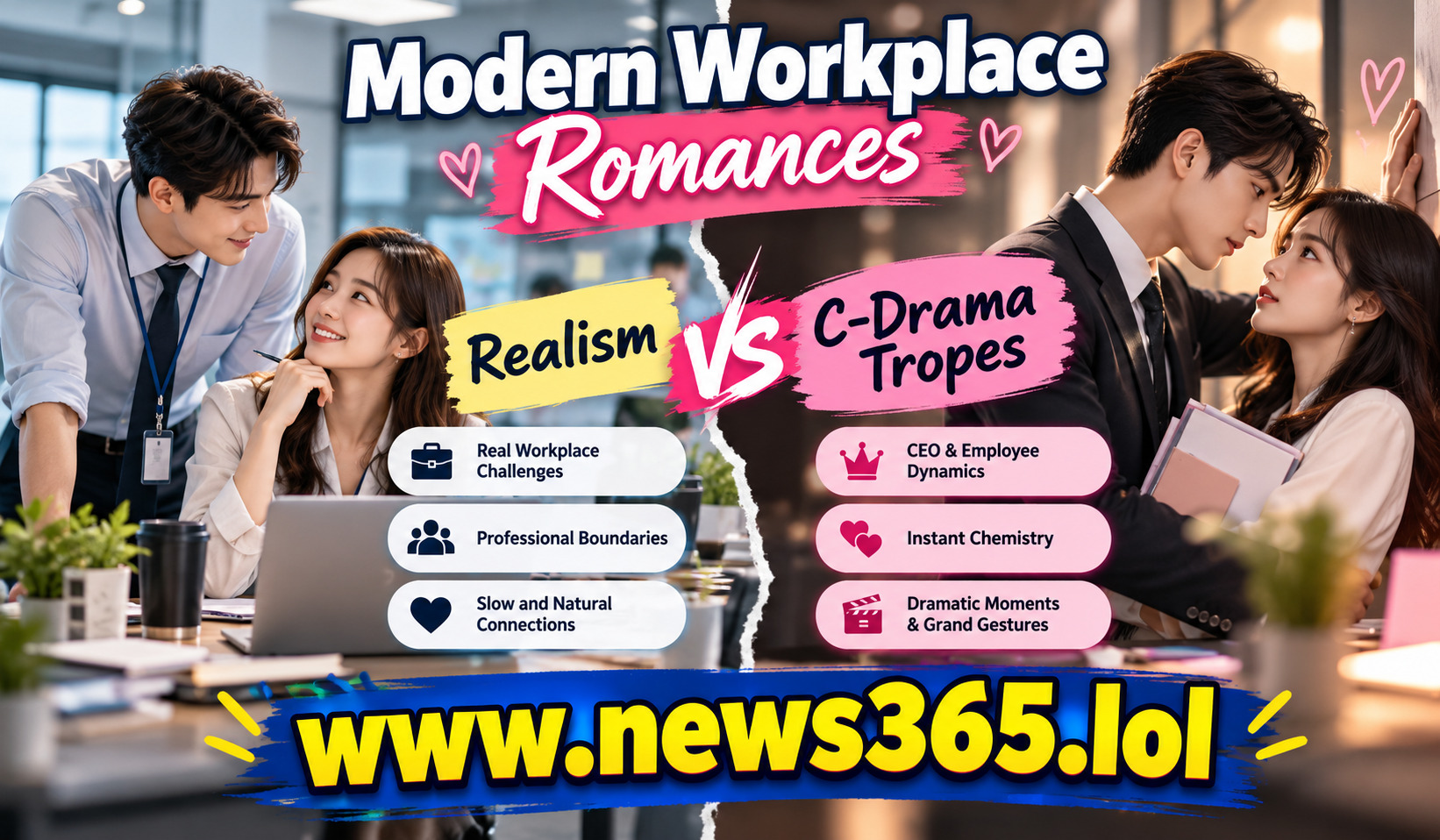
Modern workplace romances have become a familiar and entertaining part of Chinese television dramas, popularly known as C-dramas. From ambitious young professionals and demanding executives to former lovers reuniting in corporate offices, these stories turn everyday professional environments into settings for emotional conflicts, unexpected attraction, and personal growth. Their popularity comes from a combination of romantic fantasy, attractive leads, career ambitions, and situations that many viewers can recognise from real life.
However, there is an interesting difference between the workplace shown on screen and the one people experience every day. In real offices, relationships develop gradually, professional decisions involve consequences, and career success usually requires patience and consistent effort. In C-dramas, a single misunderstanding, a surprise meeting, or an unexpected connection with a powerful executive can change everything.
This contrast raises an important question: how realistic are modern workplace romances, and how much do they depend on familiar romantic tropes? As audiences explore more stories about careers, relationships, and independence, the genre continues to offer both comforting fantasy and opportunities for more realistic storytelling.
Why Workplace Romance Remains Popular
The workplace provides a natural setting for romantic storytelling because people often spend a considerable amount of time with colleagues. Working together creates opportunities to understand someone’s personality, observe their strengths, and discover qualities that might not be obvious during a brief meeting. Shared responsibilities and professional challenges can also create emotional connections.
C-dramas use this environment to build relationships between characters with different personalities and ambitions. One character might be disciplined, reserved, and highly career-focused, while the other is outspoken, creative, or determined to prove their abilities. Their contrasting approaches create conflict, but they can also encourage each character to grow.
Popular examples include Love Is Sweet, which combines financial-sector competition with a relationship shaped by earlier connections, and Our Interpreter, which brings former lovers together again through their professional lives. Both demonstrate how careers can provide more than a background for romance: work can influence the characters’ decisions, reveal unresolved feelings, and create meaningful reasons for them to interact.
The genre also appeals to viewers who enjoy seeing professional competence become part of romantic attraction. A character who solves a difficult problem, supports a colleague during a crisis, or demonstrates determination can become attractive through actions rather than appearance alone.
The Famous CEO and Ordinary Employee Trope
One of the most recognisable workplace romance conventions is the relationship between a wealthy, influential executive and an ordinary employee. The executive is often exceptionally intelligent, confident, and emotionally distant. The employee may be inexperienced but hardworking, independent, and unwilling to accept unfair treatment.
Their relationship creates an appealing contrast between power and vulnerability. The employee gradually discovers a more caring side of the executive, while the executive learns to express emotions and understand someone outside their privileged world.
This formula can be entertaining because it promises personal transformation alongside romantic fulfilment. The powerful character learns that money and professional achievements cannot replace emotional intimacy, while the less powerful character gains confidence and recognition.
Nevertheless, this dynamic often becomes less convincing when the story ignores workplace hierarchy. In reality, a manager has considerable influence over an employee’s assignments, performance reviews, promotions, and job security. A romantic relationship between them can create concerns about favouritism, pressure, and whether both people can make decisions freely.
A believable workplace romance should recognise these complications. Attraction alone does not remove the responsibility that comes with professional authority. When a drama acknowledges these boundaries, the relationship can become more emotionally mature instead of relying entirely on the fantasy of a powerful boss falling in love.
Love at First Sight Versus Gradual Emotional Connection
Another common C-drama trope is instant attraction. Two characters meet unexpectedly, exchange meaningful looks, and quickly become fascinated by one another. Coincidences repeatedly bring them together until their relationship becomes impossible to ignore.
Such moments are effective in romantic storytelling because they establish chemistry quickly. A chance meeting in an elevator, an unexpected reunion at a business event, or a late-night conversation after a difficult working day can create memorable scenes.
Real relationships, however, usually require more than a dramatic first encounter. People discover one another’s values through everyday conversations, disagreements, shared responsibilities, and the way they behave under pressure. Trust develops through repeated actions rather than a single romantic gesture.
This is where slower workplace romances can feel particularly satisfying. When characters gradually learn to respect one another’s abilities, the eventual relationship feels earned. Professional disagreements can also become opportunities for personal understanding, provided the characters communicate honestly rather than relying on endless misunderstandings.
The most effective stories balance the excitement of immediate chemistry with the patience needed to develop a convincing emotional connection.
Workplace Rivalries: Drama or Realistic Conflict?
Professional rivalry is another popular element of modern C-dramas. Two colleagues may compete for a promotion, disagree about a business strategy, or struggle to gain recognition from the same manager. Their initial hostility can eventually develop into mutual respect and romantic attraction.
This setup works because professional competition naturally creates opportunities for characters to reveal their strengths and weaknesses. A talented employee may struggle with confidence, while an experienced colleague may need to learn how to collaborate rather than control every decision.
In real workplaces, disagreements are common, but they are rarely resolved through dramatic confrontations alone. Employees must consider deadlines, team responsibilities, company policies, and the consequences of their choices. A person who repeatedly sabotages a colleague would likely damage their own reputation as well as the team’s performance.
Some dramas simplify these realities by allowing misunderstandings to drive entire storylines. A character overhears half a conversation, assumes the worst, and refuses to ask for clarification. The resulting conflict may stretch across several episodes even when a simple discussion could resolve it.
Although misunderstandings can create suspense, realistic communication gives a romance greater depth. Characters who learn to discuss problems, acknowledge mistakes, and cooperate professionally demonstrate emotional maturity. Their relationship becomes more convincing because love develops alongside personal responsibility.
Career Ambitions and the Reality of Professional Growth
A major strength of workplace romances is their ability to explore ambition. Many protagonists enter a company hoping to build a successful career, gain financial independence, or establish themselves in a competitive industry. Their romantic relationships develop while they pursue these goals.
However, some dramas make career progression appear remarkably easy. A young employee may impress senior executives after completing one project, receive opportunities beyond their experience, or rise through the organisation largely because the main romantic lead supports them.
Real professional development usually takes longer. Employees must acquire skills, accept feedback, manage difficult assignments, and learn from mistakes. Promotions depend on performance, organisational needs, available opportunities, and sometimes factors outside an individual’s control.
A stronger workplace romance gives the protagonist an independent professional identity. The character should have goals that remain important even when the romantic relationship faces difficulties. Their achievements should come from their own decisions and abilities, not simply from receiving special treatment from a partner.
The 2026 workplace drama The Early Spring provides a contemporary example of storytelling that places career development and complicated personal relationships within the same narrative. Its advertising-agency setting follows a young professional navigating a demanding environment while dealing with a difficult relationship with her creative director. The premise illustrates how professional pressure can become an important part of romantic and personal development.
When a drama allows its characters to experience setbacks, improve their abilities, and make difficult career decisions, the workplace feels like a meaningful part of the story rather than a decorative backdrop.
Comparing Workplace Romance Tropes With Real Life
The difference between romantic fantasy and professional reality becomes clearer when common C-drama situations are compared with everyday workplace experiences.
| Common C-drama trope | More realistic workplace experience |
| A cold CEO secretly gives special attention to one employee. | Attraction develops alongside professional boundaries and fair treatment. |
| A single successful project leads to a major promotion. | Career progression generally requires sustained performance and relevant skills. |
| Colleagues fall in love after a few dramatic encounters. | Trust often develops through repeated interactions and shared experiences. |
| Misunderstandings continue because characters avoid honest conversations. | Clear communication can resolve disagreements before they escalate. |
| A romantic partner solves every professional problem. | Individuals need their own skills, support networks, and decision-making abilities. |
| Office conflicts disappear once the couple becomes official. | Couples may still need to manage boundaries, team relationships, and competing responsibilities. |
These differences do not mean that every C-drama must imitate real corporate life. Romantic fiction is allowed to exaggerate events, create coincidences, and offer viewers an escape from ordinary routines. The challenge is maintaining enough realism for the emotional journey to remain believable.
Gender Expectations and Changing Romantic Leads
Modern workplace romances also reflect changing attitudes toward relationships and professional independence. Older romantic formulas often presented a successful male executive as the protector and a female protagonist as someone who needed his assistance to overcome professional or personal difficulties.
Contemporary stories increasingly give female leads their own ambitions, expertise, and opinions. They may challenge unfair decisions, pursue leadership positions, or choose professional opportunities even when those choices complicate their relationships.
This change makes the genre more relatable to viewers who want romantic relationships built on mutual respect. A capable female protagonist does not need to be perfect, but she should have the freedom to make decisions and learn from their consequences.
Male characters can also become more interesting when emotional vulnerability is treated as a strength rather than a weakness. Instead of expressing affection exclusively through expensive gifts, possessive behaviour, or dramatic rescues, they can demonstrate care by listening, respecting boundaries, sharing responsibilities, and supporting their partners’ ambitions.
Healthy romance does not require both characters to be equally successful in every area. It requires them to recognise each other’s individuality and treat each other as partners rather than projects to be managed.
Office Romance, Power Imbalances, and Professional Boundaries
The romanticisation of workplace relationships becomes more complicated when one character has authority over the other. A relationship between colleagues at similar professional levels is different from one involving a supervisor who controls the other person’s employment prospects.
In fictional stories, an executive’s intense attention may be presented as proof of devotion. In reality, repeated unwanted advances, pressure to reciprocate affection, or professional rewards tied to romantic interest can create serious problems.
Workplace romances also affect colleagues who are not part of the relationship. Perceived favouritism can damage trust, while disagreements between partners may influence team communication. Some organisations therefore have policies covering relationships between employees, particularly where a reporting relationship exists.
Responsible storytelling can address these issues without losing its romantic appeal. Characters can acknowledge conflicts of interest, establish clear boundaries, and make decisions that protect their professional independence. In situations involving direct supervision, changing reporting arrangements may help reduce unequal power dynamics.
Such details can strengthen a drama by showing that affection involves responsibility as well as emotion.
How C-Dramas Can Balance Fantasy With Realism
The best workplace romances do not necessarily eliminate familiar tropes. Instead, they give those tropes believable emotional consequences.
A strict executive can still become a romantic lead, but the story becomes stronger when the character learns to communicate respectfully. A rivals-to-lovers storyline can remain entertaining when the competition is based on genuine professional differences rather than deliberate cruelty. Even an unexpected reunion between former lovers can feel realistic when the characters have changed through experience.
Three storytelling choices can help create this balance:
- Give characters independent goals. Their careers, friendships, and personal development should matter beyond romance.
- Make communication part of the relationship. Disagreements should encourage meaningful conversations rather than endless avoidable confusion.
- Show the consequences of professional decisions. Power, promotions, workplace policies, and team relationships should not disappear whenever romance takes centre stage.
Another important factor is pacing. A relationship does not need to move slowly in every drama, but major emotional changes should have understandable motivations. Viewers are more likely to invest in a couple when they can see why the characters trust each other, what they learn together, and how their relationship changes their outlook.
Ultimately, realism is not about reproducing every detail of office life. It is about making characters’ emotions, motivations, and decisions feel credible within the world the drama creates.
Conclusion
Modern workplace romances occupy an interesting space between reality and fantasy. C-dramas transform ordinary professional interactions into compelling love stories through attractive characters, dramatic coincidences, workplace rivalries, and ambitious romantic leads. These familiar tropes are part of the genre’s appeal, but they can become less convincing when they ignore career development, professional boundaries, or honest communication.
The strongest stories recognise that people have identities beyond their relationships. Their careers influence their choices, their experiences shape their personalities, and their romantic connections develop through respect and understanding.
Ultimately, workplace romance does not need to choose between realism and fantasy. By combining engaging romantic conventions with believable character development, C-dramas can deliver the excitement viewers expect while creating relationships that feel meaningful and emotionally authentic.
Frequently Asked Questions (FAQs)
1. What is a modern workplace romance C-drama?
A modern workplace romance C-drama is a Chinese television series that develops a love story within a professional setting. The characters may be colleagues, business rivals, managers, employees, or former partners who reconnect through their careers.
2. Why are CEO-and-employee romances so common in C-dramas?
This storyline creates a contrast between professional authority and personal vulnerability. It allows writers to explore ambition, emotional growth, social differences, and the possibility that a powerful person may reveal a softer side through love.
3. Are workplace romances in C-dramas realistic?
Some aspects are realistic, including professional competition, long working hours, career pressure, and relationships formed through shared experiences. Other elements, such as instant promotions, repeated coincidences, and executives becoming deeply involved in employees’ personal lives, are often exaggerated for entertainment.
4. Which C-dramas explore workplace romance?
Examples include Love Is Sweet, Our Interpreter, Here We Meet Again, You Are My Secret, and The Early Spring. Each uses a different professional environment to explore attraction, ambition, past relationships, or personal growth.
5. What makes a workplace romance believable?
Believable workplace romances feature clear motivations, gradual emotional development, mutual respect, realistic professional challenges, and characters who maintain their own ambitions. Honest communication and appropriate boundaries also help make relationships feel authentic.
6. Do workplace romance C-dramas promote unrealistic expectations?
Some stories may create unrealistic expectations by presenting excessive attention, possessiveness, or professional favouritism as romantic gestures. However, others use familiar tropes to explore healthier communication, independence, and the balance between love and career.