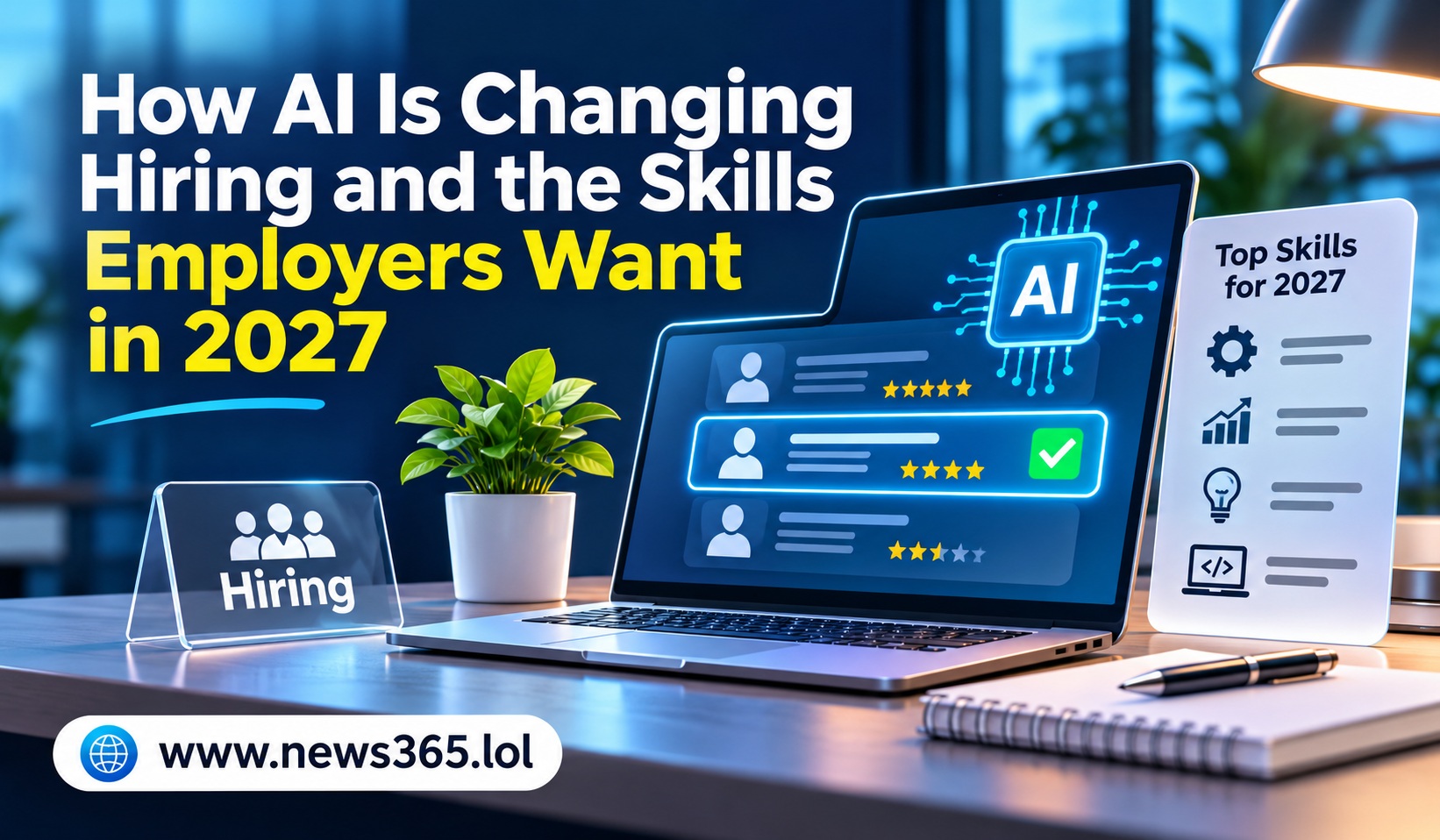
Artificial intelligence is changing the way people work, and its influence on hiring is becoming stronger every year. Companies are using AI to complete daily tasks, manage information, communicate with customers, and make business decisions. As these changes continue, employers are also changing the way they find, evaluate, and hire employees.
In 2027, having a degree or years of work experience may not be enough to stand out in a competitive job market. Employers will increasingly look for people who understand modern technology, know how to work with AI tools, and can solve problems without depending entirely on automated systems.
This does not mean that human workers will become less important. Instead, the value of human abilities is changing. Creativity, communication, decision-making, flexibility, and practical knowledge will remain important, even as AI takes responsibility for more routine work.
For job seekers, understanding these changes can make it easier to prepare for future opportunities. For businesses, adapting their hiring practices will be important for finding employees who can work effectively in an AI-driven workplace.
How AI Is Changing the Hiring Process
Hiring has traditionally involved several steps, including reviewing applications, checking qualifications, conducting interviews, and selecting suitable candidates. These activities can take considerable time, especially when a company receives hundreds or thousands of applications.
AI is making several parts of this process faster. Recruitment teams can now use software to review applications, identify relevant experience, compare skills, and organise candidate information. This allows hiring managers to spend less time on repetitive administrative work and more time understanding applicants.
AI-powered recruitment tools can also help companies find candidates who may not have applied through traditional channels. Instead of depending only on job titles or educational qualifications, some systems can identify people based on their experience and abilities.
However, automated hiring systems are not perfect. They may misunderstand information, overlook suitable applicants, or favour certain application formats. This is why human involvement remains important throughout the recruitment process.
In 2027, companies are likely to focus more on combining AI-powered recruitment tools with human judgement. Technology can help identify potential candidates, but people should remain responsible for important hiring decisions.
AI Skills Will Become Important Across Different Industries
One major change in the employment market is that AI knowledge is no longer limited to software developers and technology professionals. Employees in marketing, finance, education, healthcare, administration, sales, and customer service are also beginning to use AI tools.
For example, marketing professionals can use AI to research audiences, prepare content ideas, and understand campaign performance. Accountants can use automation to organise financial information and identify unusual transactions. Customer service teams can use AI assistants to respond to common questions more quickly.
This means employers will increasingly value candidates who understand how AI can support their particular profession.
According to LinkedIn’s 2026 labour market research, demand for AI literacy is growing across technical and non-technical occupations. Its research also highlights the importance of combining technology knowledge with human abilities such as communication, adaptability, and problem-solving.
For job seekers, this creates an important opportunity. They do not necessarily need to become AI engineers to benefit from the growth of artificial intelligence. Learning how to use relevant AI tools in their existing profession can make their skills more valuable.
Practical AI Knowledge Will Matter More Than Basic Awareness
Knowing what artificial intelligence means is different from knowing how to use it in real working situations. Employers will increasingly look for candidates who can demonstrate practical experience rather than simply mention AI knowledge on their resumes.
For example, a content writer who understands how to use AI for research, editing, and idea development may have an advantage over someone who has never worked with these tools. However, the writer must still be able to check information, maintain quality, and create original content.
Similarly, a business analyst should understand how AI can help organise data while being capable of checking the results and explaining what they mean.
Employers will want to know whether candidates can use technology to improve their work without losing accuracy or independent thinking.
This is why practical projects, workplace examples, and demonstrations of completed work may become more valuable during recruitment. Candidates who can explain how they have used AI to solve an actual problem will have a stronger way to demonstrate their abilities.
Critical Thinking Will Become a Valuable Employee Skill
AI can produce answers, recommendations, reports, and ideas within seconds. However, not every result is accurate. Sometimes, AI tools provide incorrect information or produce answers that sound convincing but contain mistakes.
Employees must understand how to question these results instead of accepting everything generated by a machine.
Critical thinking involves examining information, checking facts, understanding different viewpoints, and making sensible decisions. These abilities are important when AI is involved because someone must take responsibility for the final result.
For example, a financial professional may use AI to organise business figures, but they still need to understand whether the information makes sense. A marketing manager may use AI to prepare a campaign plan but must decide whether the recommendations suit the company’s customers.
In 2027, employers will value people who can use AI while maintaining independent judgement. Being able to recognise mistakes and make informed decisions will become an important part of many professional roles.
Communication and Teamwork Will Remain Essential
Even with advanced AI tools, businesses still depend on people to communicate, understand customers, manage teams, and build professional relationships.
Good communication helps employees explain ideas, understand instructions, share feedback, and work with colleagues. These abilities are difficult to replace completely because workplace communication often involves emotions, personal understanding, and situations that require careful judgement.
Teamwork will also remain important. Employees may work with colleagues from different departments, locations, and professional backgrounds. They must be able to share responsibilities and find solutions together.
AI can support communication by preparing meeting summaries, organising messages, and helping employees write professional documents. However, it cannot fully replace the personal understanding required to manage disagreements, motivate colleagues, or build trust.
Companies will therefore continue to look for employees who combine technical knowledge with strong interpersonal abilities.
Creativity and Problem-Solving Will Gain More Importance
Artificial intelligence can generate designs, suggest business ideas, prepare written content, and provide possible solutions to different problems. However, producing an answer does not always mean producing the best answer.
Businesses need employees who can understand customer needs, recognise opportunities, and develop ideas that make sense for their goals.
Creativity is not limited to artists, designers, or writers. It is also important in product development, business planning, marketing, education, and management.
Problem-solving is equally valuable. When something unexpected happens, employees must understand the situation and decide what should happen next. AI can suggest possible solutions, but human experience and practical knowledge are often necessary to choose the right approach.
In 2027, employers will increasingly appreciate workers who can think beyond standard instructions and find useful ways to improve everyday business activities.
Employers Will Focus More on Skills Than Job Titles
Traditional hiring has often focused on educational qualifications, previous job titles, and years of experience. These details will continue to matter, but companies are gradually giving more attention to what candidates can actually do.
Two people may have different educational backgrounds but similar abilities. One candidate may have practical experience managing projects, while another may have developed similar skills through independent work or professional training.
A skills-focused hiring approach allows companies to consider a wider range of candidates.
For example, someone applying for a digital marketing position may demonstrate knowledge of customer research, content planning, campaign management, and AI tools even without having worked under the exact same job title.
Korn Ferry’s 2027 Talent Trends research highlights this movement towards skills-based work. Its survey found that 65% of leaders expect work to become more organised around skills rather than traditional roles.
This change could create more opportunities for people who continue learning and building practical experience throughout their careers.
Entry-Level Jobs May Require Different Skills
AI is also changing the responsibilities associated with entry-level positions. In the past, new employees often started with basic administrative activities, simple research, data entry, and routine reporting.
Many of these activities can now be completed with automated tools. As a result, companies may expect junior employees to contribute more quickly to meaningful work.
This could make it harder for some fresh graduates to gain their first professional opportunity. Employers may expect them to demonstrate problem-solving, communication, technology awareness, and the ability to manage responsibilities from an earlier stage of their careers.
However, AI will not remove every opportunity for beginners. New roles will also develop around managing AI tools, checking information, supporting business operations, and helping companies introduce new technology.
Students and fresh graduates should therefore focus on gaining practical experience during their education. Internships, personal projects, online training, and real-world assignments can help them demonstrate their abilities.
Understanding how to use AI responsibly while developing strong basic professional skills will be particularly useful.
Adaptability Will Be One of the Most Important Skills in 2027
Technology changes quickly, and the tools businesses use today may be different from those they use a few years later. Employees who depend entirely on one tool or one working method may find it difficult to adjust.
Adaptability means being willing to learn, accept new responsibilities, and change working methods when necessary.
For example, an employee who previously prepared reports manually may need to learn an AI-powered reporting tool. A customer service professional may need to understand how automated support systems work. A manager may need to guide a team that includes both human employees and AI assistants.
Korn Ferry’s research identifies adaptability as the most wanted workforce skill for 2027. This reflects the growing need for employees who can handle changes in technology and business requirements.
People who regularly update their knowledge and remain open to new working methods will be better prepared for changing career opportunities.
AI Will Create New Job Opportunities
Although AI may change or reduce the need for certain tasks, it is also creating demand for new types of work.
Businesses need professionals who can develop AI systems, manage technology projects, protect information, evaluate automated results, and help employees understand new tools.
Roles related to AI development, data management, cybersecurity, AI training, and technology consulting may continue to attract employer interest.
There will also be opportunities for professionals who combine industry knowledge with AI skills. For example, a healthcare professional who understands AI-supported medical systems or a finance specialist who can work with automated analysis tools may bring valuable knowledge to an organisation.
According to LinkedIn’s October 2026 research, AI Engineer has become one of the fastest-growing occupations across several major economies, including India.
However, not everyone needs to move into a technical career. Many existing professions will change as AI becomes part of everyday work. Employees who understand how to apply these tools within their industries may find new career opportunities.
How Job Seekers Can Prepare for AI-Driven Hiring
Preparing for the changing employment market does not require learning every new AI tool. Instead, job seekers should understand which technologies are relevant to their profession and how these tools can improve their work.
A marketing professional can learn AI-supported research and campaign planning. An accountant can explore tools that assist with financial reporting. A student interested in software development can practise coding with AI assistance while continuing to understand programming fundamentals.
Building a strong professional portfolio can also help. Employers may be more interested in seeing actual work than reading general statements about technology knowledge.
Candidates should also update their resumes to highlight practical skills, completed projects, professional achievements, and relevant technology experience.
Interview preparation will need attention as well. Applicants should be ready to explain how they use AI, how they check its results, and when they prefer to complete a task independently.
Most importantly, job seekers should not depend entirely on AI-generated applications or interview answers. Employers want to understand the actual person behind the application, including their knowledge, communication style, and ability to think independently.
The Future of Hiring Will Combine AI and Human Judgement
AI will continue to influence recruitment, but successful hiring will still depend on understanding people. Companies need employees who can contribute to business goals, work with colleagues, understand customers, and make responsible decisions.
Recruiters may use AI to manage large amounts of information and improve the speed of hiring. At the same time, interviews, practical assessments, and human conversations will remain important for understanding a candidate’s real abilities.
The most successful organisations will be those that use technology carefully without forgetting the value of human experience.
For employees, the future will reward a combination of professional knowledge, AI awareness, creativity, adaptability, and communication. People who continue developing these abilities will be better prepared for the opportunities and challenges that 2027 brings.
Frequently Asked Questions
1. How will AI change hiring in 2027?
AI will make several recruitment activities faster, including resume screening, candidate matching, interview scheduling, and application management. Employers will also use practical assessments to understand how candidates work with AI tools. Human judgement will remain important when making final hiring decisions.
2. Which skills will employers want most in 2027?
Employers are expected to place greater importance on adaptability, AI knowledge, critical thinking, communication, creativity, problem-solving, and teamwork. Practical knowledge of industry-related tools will also help candidates stand out.
3. Will AI replace entry-level jobs in 2027?
AI may reduce the need for some routine entry-level activities, but it will also create new responsibilities and opportunities. Fresh graduates will need to develop practical skills, understand modern technology, and demonstrate their ability to solve real workplace problems.
4. Do all professionals need to learn AI tools?
Not everyone needs advanced AI programming knowledge. However, understanding how AI tools work and how they can support everyday professional tasks will become useful across many industries. The most relevant tools will depend on each person’s career.
5. How can freshers prepare for AI-based hiring?
Freshers can prepare by learning relevant AI tools, developing communication and problem-solving abilities, completing practical projects, and gaining internship experience. They should also understand their core subjects instead of depending entirely on AI-generated answers.