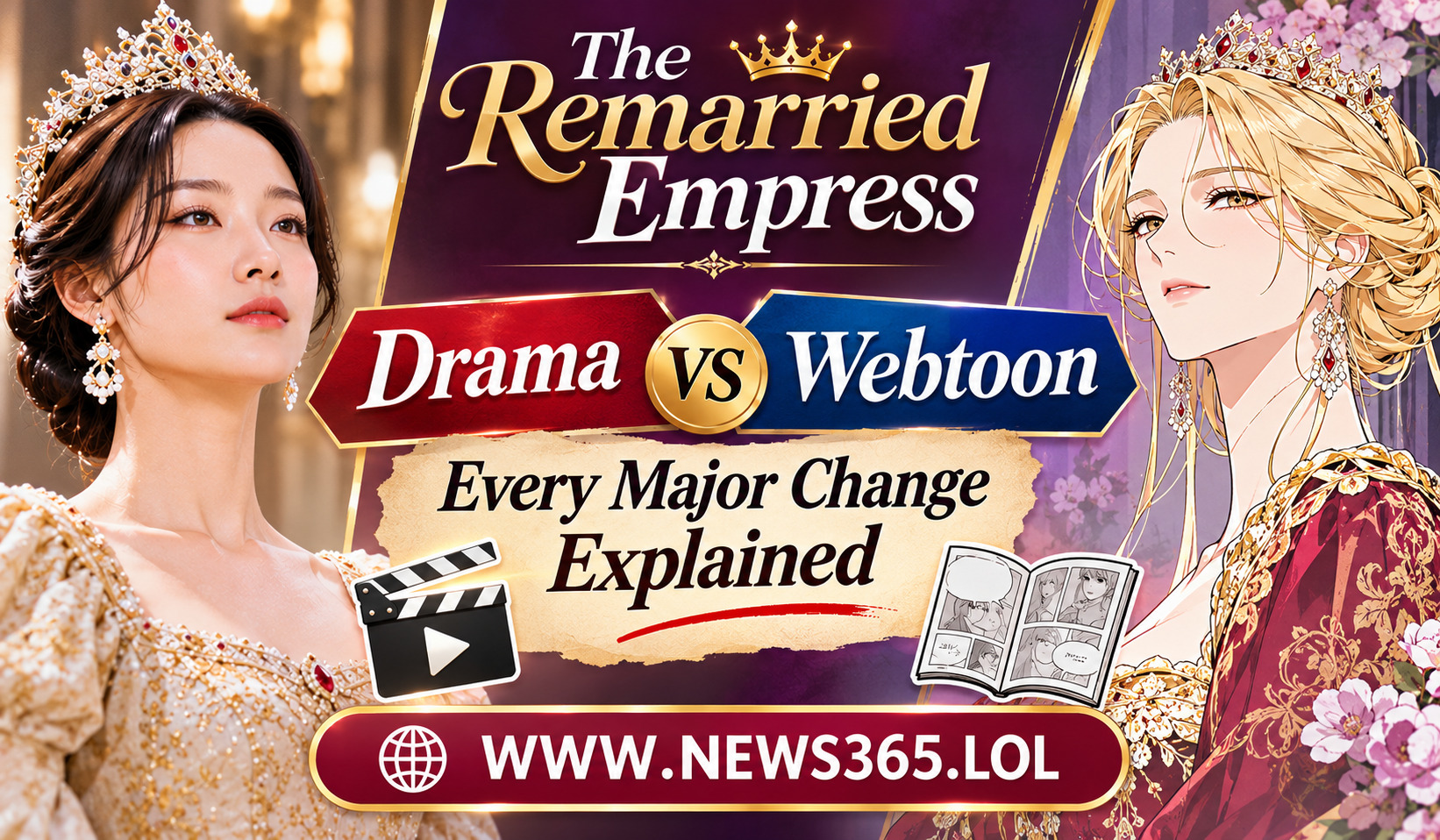
The Remarried Empress Drama vs Webtoon: Every Major Change Explained
Adapting a webtoon with millions of loyal readers is a job that almost never makes everyone happy, and The Remarried Empress drama was no exception.
The Remarried Empress was adapted into a live-action Korean drama, bringing the story of Navier, Sovieshu, and Rashta to a new audience. For fans of the original webtoon and web novel, the adaptation came with both surprises and frustrations. This post covers the most significant differences between the drama and the source material so you know exactly what changed and why it matters.
Note: This post contains spoilers for both the webtoon and the drama. Read accordingly.
From Page to Screen: How the Adaptation Happened
Live-action adaptations of Korean webtoons have become more common in recent years, with platforms including Netflix and domestic Korean broadcasters picking up popular titles. The Remarried Empress attracted significant attention as a candidate for adaptation given its large readership and its appeal across different age groups.
Webtoon-to-drama adaptations in Korea face a consistent set of challenges. The pacing of a webtoon, which can unfold across hundreds of chapters over years, rarely survives intact when compressed into a standard drama run of 16 to 20 episodes. Subplots get cut, characters get merged, and timelines get reordered. All of this happened with The Remarried Empress.
The drama kept the core premise: Navier as a wronged empress who chooses to leave on her own terms, Sovieshu’s fateful decision, Rashta’s complicated role, and Heinrey’s patient courtship. Around that core, however, a number of things were adjusted.
Did You Know? Webtoon adaptations in Korea have a mixed track record with original fans. Some, like True Beauty and Itaewon Class, were broadly well-received by fans of the source material. Others drew criticism for heavy changes to character arcs and story outcomes.
Character Changes in the Drama
The most discussed changes between the webtoon and the drama involve how the central characters are presented, particularly Rashta and Sovieshu.
Rashta in the drama comes across as somewhat less layered than she is in the webtoon. The source material gives her considerable backstory and spends time inside her perspective. The drama, by necessity, has less time for that kind of depth. As a result, some of the complexity that makes webtoon-Rashta genuinely difficult to categorize is reduced. Drama viewers tend to find her more straightforwardly antagonistic, which shifts the emotional balance of her scenes with Navier.
Sovieshu in the drama is presented with slightly softer edges in certain scenes compared to the webtoon. A few moments that were more damning in the source material are handled with more ambiguity on screen. Whether this was an intentional creative choice or simply a result of condensed storytelling is not entirely clear, but it affected how viewers responded to his arc.
Heinrey in the drama was largely well-received by fans. His demeanor, the balance between warmth and political awareness, translated well to the screen. The casting drew positive responses from most fans who had a clear picture of the character from the webtoon.
Navier in the drama is faithful to the source in the ways that matter most. She is composed, intelligent, and never reduced to a reactive figure. The adaptation kept her dignity intact, which many fans considered the most important thing to preserve.
Plot and Pacing Differences
The timeline in the drama moves faster than in the webtoon across almost every arc. This was expected, but the compression affected some storylines more than others.
The political relationship between the Eastern Empire and the Western Kingdom receives less attention in the drama. In the webtoon, the tension between the two powers is a consistent background that shapes decisions and conversations throughout the story. The drama moves through these elements more quickly, which means some of the political maneuvering that makes Navier and Heinrey’s positions so interesting loses detail.
Rashta’s backstory unfolds differently in the drama. The webtoon reveals her history gradually and carefully over many chapters. The drama accelerates this reveal, which changes how viewers process her character. Getting the information earlier means less time spent in uncertainty, and that changes the texture of her scenes.
The divorce and remarriage, the central event of the story, happens at roughly the same point in both versions. The drama does not rush this moment. That choice was widely praised, as it is the scene the entire story builds toward and it needed room to land.
Did You Know? The title of the story refers to the fact that Navier remarries after leaving Sovieshu. In many ways the whole story is structured so that the title makes complete sense only after you have read it.
Scenes the Drama Added That Were Not in the Webtoon
Adaptations sometimes expand as well as compress. The drama added several scenes that do not exist in the webtoon, most of them small character moments that work better in a visual format than on a page.
There are additional scenes between Navier and her ladies-in-waiting that flesh out the court’s atmosphere in ways the webtoon handles mostly through narration. These scenes work well and do not conflict with the source material.
A few scenes between Heinrey and his own court were added to give the Western Kingdom more presence on screen. Because the drama cast characters who needed screen time, some expansion of the Western Kingdom’s internal dynamics was necessary. These scenes largely served the story without distorting it.
Some of the more dramatic confrontations between Navier and court figures were given additional dialogue in the drama. The visual medium allows tension to build through performance and silence in ways that work differently from a webtoon panel. These expanded moments were generally well-received.
What the Drama Left Out
Certain subplots from the webtoon were significantly reduced or removed entirely in the drama adaptation.
Several secondary characters who play meaningful roles in the webtoon’s later chapters appear only briefly in the drama or not at all. Because the drama could not commit to the depth of storyline these characters require, cutting them was a reasonable decision, even if it disappointed fans who were attached to them.
Some of the internal monologue that makes the webtoon version of Navier so compelling is by its nature impossible to fully translate to screen. The webtoon spends considerable time inside Navier’s head, letting readers follow her reasoning in detail. The drama conveys this through performance, but inevitably some of that precision is lost.
Rashta’s child’s storyline, which is handled with significant care in the webtoon, is abbreviated in the drama. The full complexity of that situation, which involves multiple revelations over the course of the story, is condensed into fewer scenes. Fans of the webtoon found this one of the more significant losses in the adaptation.
Did You Know? It is common for Korean drama adaptations to end earlier than their source material. Some webtoon adaptations cover only the first half or two-thirds of the original story, leaving later events unfilmed. Whether the drama covered the full story or stopped at a certain point was a question many fans followed closely.
Key Takeaways
- Core premise: Preserved faithfully in the drama
- Rashta’s arc: Simplified compared to the webtoon, losing some complexity
- Sovieshu’s arc: Slightly softened in certain scenes
- Heinrey: Largely faithful and well-received by fans
- Navier: Faithful in all the ways that matter most
- Political storylines: Condensed significantly, with less detail on the Eastern-Western dynamic
- Added scenes: Mostly small character moments for the Western Kingdom and Navier’s court
- Removed content: Several secondary characters and Rashta’s child’s full storyline
Frequently Asked Questions
Is the drama faithful to the webtoon? The drama preserves the central story and the most important character moments, but compresses or removes several subplots and secondary character arcs.
Which version is better, the webtoon or the drama? Most fans of the original source material prefer the webtoon for its depth, while the drama serves as a good introduction for viewers new to the story.
Does the drama cover the full story? The drama covers the central arc of the story, though the extent to which it reaches the original ending varies depending on what was included in the final episodes.
Were fans happy with the adaptation? Reactions were mixed, as is typical for webtoon adaptations; the central character portrayals received praise while some plot changes drew criticism.
Is it worth watching the drama if you have already read the webtoon? Yes, particularly if you enjoy seeing the characters performed live, though readers should expect differences and not expect a panel-for-panel recreation.
Conclusion
What the drama changed from the webtoon mostly comes down to the practical limits of adaptation. The Remarried Empress is a story built on accumulation, on small revelations, slow-building relationships, and years of court life that cannot all fit into a standard drama run. What the adaptation kept was the heart of it: Navier’s dignity, the choice that changes everything, and the argument that a woman who knows her worth does not have to stay anywhere she is not valued. For that, both versions are worth your time.Adapting a webtoon with millions of loyal readers is a job that almost never makes everyone happy, and The Remarried Empress drama was no exception.
The Remarried Empress was adapted into a live-action Korean drama, bringing the story of Navier, Sovieshu, and Rashta to a new audience. For fans of the original webtoon and web novel, the adaptation came with both surprises and frustrations. This post covers the most significant differences between the drama and the source material so you know exactly what changed and why it matters.
Note: This post contains spoilers for both the webtoon and the drama. Read accordingly.
From Page to Screen: How the Adaptation Happened
Live-action adaptations of Korean webtoons have become more common in recent years, with platforms including Netflix and domestic Korean broadcasters picking up popular titles. The Remarried Empress attracted significant attention as a candidate for adaptation given its large readership and its appeal across different age groups.
Webtoon-to-drama adaptations in Korea face a consistent set of challenges. The pacing of a webtoon, which can unfold across hundreds of chapters over years, rarely survives intact when compressed into a standard drama run of 16 to 20 episodes. Subplots get cut, characters get merged, and timelines get reordered. All of this happened with The Remarried Empress.
The drama kept the core premise: Navier as a wronged empress who chooses to leave on her own terms, Sovieshu’s fateful decision, Rashta’s complicated role, and Heinrey’s patient courtship. Around that core, however, a number of things were adjusted.
Did You Know? Webtoon adaptations in Korea have a mixed track record with original fans. Some, like True Beauty and Itaewon Class, were broadly well-received by fans of the source material. Others drew criticism for heavy changes to character arcs and story outcomes.
Character Changes in the Drama
The most discussed changes between the webtoon and the drama involve how the central characters are presented, particularly Rashta and Sovieshu.
Rashta in the drama comes across as somewhat less layered than she is in the webtoon. The source material gives her considerable backstory and spends time inside her perspective. The drama, by necessity, has less time for that kind of depth. As a result, some of the complexity that makes webtoon-Rashta genuinely difficult to categorize is reduced. Drama viewers tend to find her more straightforwardly antagonistic, which shifts the emotional balance of her scenes with Navier.
Sovieshu in the drama is presented with slightly softer edges in certain scenes compared to the webtoon. A few moments that were more damning in the source material are handled with more ambiguity on screen. Whether this was an intentional creative choice or simply a result of condensed storytelling is not entirely clear, but it affected how viewers responded to his arc.
Heinrey in the drama was largely well-received by fans. His demeanor, the balance between warmth and political awareness, translated well to the screen. The casting drew positive responses from most fans who had a clear picture of the character from the webtoon.
Navier in the drama is faithful to the source in the ways that matter most. She is composed, intelligent, and never reduced to a reactive figure. The adaptation kept her dignity intact, which many fans considered the most important thing to preserve.
Plot and Pacing Differences
The timeline in the drama moves faster than in the webtoon across almost every arc. This was expected, but the compression affected some storylines more than others.
The political relationship between the Eastern Empire and the Western Kingdom receives less attention in the drama. In the webtoon, the tension between the two powers is a consistent background that shapes decisions and conversations throughout the story. The drama moves through these elements more quickly, which means some of the political maneuvering that makes Navier and Heinrey’s positions so interesting loses detail.
Rashta’s backstory unfolds differently in the drama. The webtoon reveals her history gradually and carefully over many chapters. The drama accelerates this reveal, which changes how viewers process her character. Getting the information earlier means less time spent in uncertainty, and that changes the texture of her scenes.
The divorce and remarriage, the central event of the story, happens at roughly the same point in both versions. The drama does not rush this moment. That choice was widely praised, as it is the scene the entire story builds toward and it needed room to land.
Did You Know? The title of the story refers to the fact that Navier remarries after leaving Sovieshu. In many ways the whole story is structured so that the title makes complete sense only after you have read it.
Scenes the Drama Added That Were Not in the Webtoon
Adaptations sometimes expand as well as compress. The drama added several scenes that do not exist in the webtoon, most of them small character moments that work better in a visual format than on a page.
There are additional scenes between Navier and her ladies-in-waiting that flesh out the court’s atmosphere in ways the webtoon handles mostly through narration. These scenes work well and do not conflict with the source material.
A few scenes between Heinrey and his own court were added to give the Western Kingdom more presence on screen. Because the drama cast characters who needed screen time, some expansion of the Western Kingdom’s internal dynamics was necessary. These scenes largely served the story without distorting it.
Some of the more dramatic confrontations between Navier and court figures were given additional dialogue in the drama. The visual medium allows tension to build through performance and silence in ways that work differently from a webtoon panel. These expanded moments were generally well-received.
What the Drama Left Out
Certain subplots from the webtoon were significantly reduced or removed entirely in the drama adaptation.
Several secondary characters who play meaningful roles in the webtoon’s later chapters appear only briefly in the drama or not at all. Because the drama could not commit to the depth of storyline these characters require, cutting them was a reasonable decision, even if it disappointed fans who were attached to them.
Some of the internal monologue that makes the webtoon version of Navier so compelling is by its nature impossible to fully translate to screen. The webtoon spends considerable time inside Navier’s head, letting readers follow her reasoning in detail. The drama conveys this through performance, but inevitably some of that precision is lost.
Rashta’s child’s storyline, which is handled with significant care in the webtoon, is abbreviated in the drama. The full complexity of that situation, which involves multiple revelations over the course of the story, is condensed into fewer scenes. Fans of the webtoon found this one of the more significant losses in the adaptation.
Did You Know? It is common for Korean drama adaptations to end earlier than their source material. Some webtoon adaptations cover only the first half or two-thirds of the original story, leaving later events unfilmed. Whether the drama covered the full story or stopped at a certain point was a question many fans followed closely.
Key Takeaways
- Core premise: Preserved faithfully in the drama
- Rashta’s arc: Simplified compared to the webtoon, losing some complexity
- Sovieshu’s arc: Slightly softened in certain scenes
- Heinrey: Largely faithful and well-received by fans
- Navier: Faithful in all the ways that matter most
- Political storylines: Condensed significantly, with less detail on the Eastern-Western dynamic
- Added scenes: Mostly small character moments for the Western Kingdom and Navier’s court
- Removed content: Several secondary characters and Rashta’s child’s full storyline
Frequently Asked Questions
Is the drama faithful to the webtoon? The drama preserves the central story and the most important character moments, but compresses or removes several subplots and secondary character arcs.
Which version is better, the webtoon or the drama? Most fans of the original source material prefer the webtoon for its depth, while the drama serves as a good introduction for viewers new to the story.
Does the drama cover the full story? The drama covers the central arc of the story, though the extent to which it reaches the original ending varies depending on what was included in the final episodes.
Were fans happy with the adaptation? Reactions were mixed, as is typical for webtoon adaptations; the central character portrayals received praise while some plot changes drew criticism.
Is it worth watching the drama if you have already read the webtoon? Yes, particularly if you enjoy seeing the characters performed live, though readers should expect differences and not expect a panel-for-panel recreation.
Conclusion
What the drama changed from the webtoon mostly comes down to the practical limits of adaptation. The Remarried Empress is a story built on accumulation, on small revelations, slow-building relationships, and years of court life that cannot all fit into a standard drama run. What the adaptation kept was the heart of it: Navier’s dignity, the choice that changes everything, and the argument that a woman who knows her worth does not have to stay anywhere she is not valued. For that, both versions are worth your time.